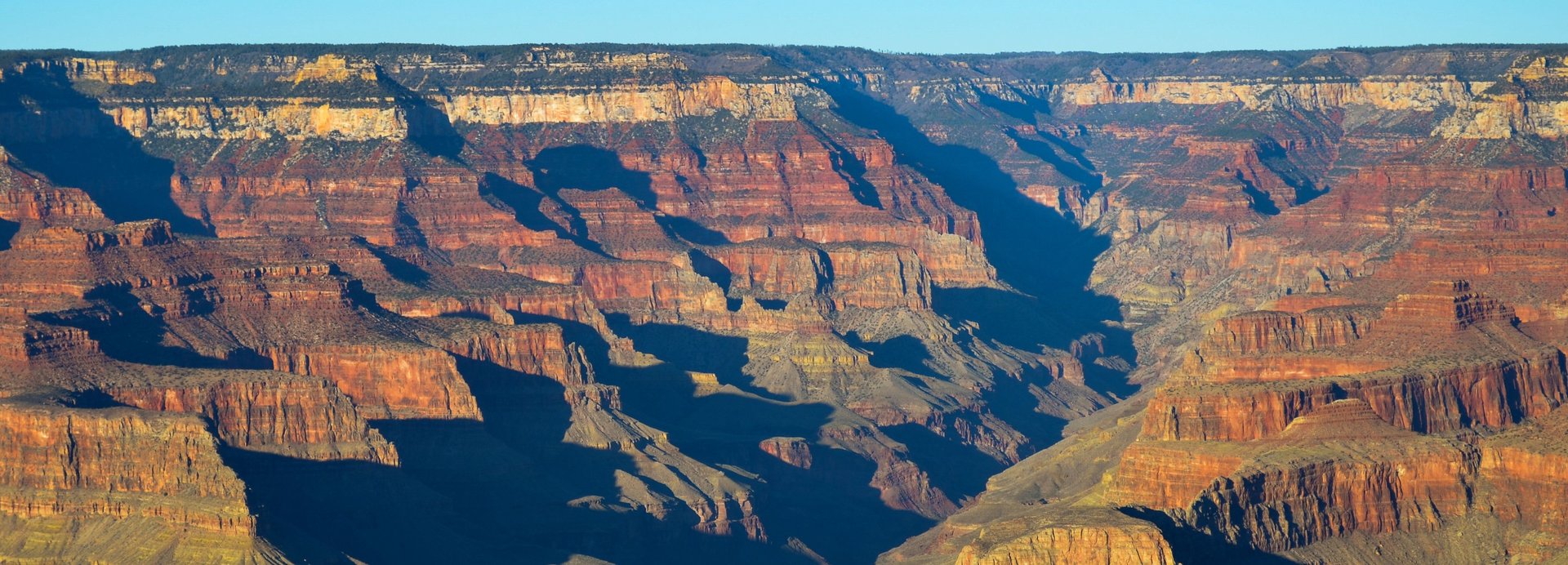
The Grand Canyon is one of them.
You can see hundreds of pictures before your trip.
You can watch videos.
You can read travel guides.
You can look at maps.
And then you arrive at the rim.
Suddenly, none of that seems quite big enough.
The scale is difficult to understand until you're standing there.
For visitors coming to Arizona for the first time, the Grand Canyon is often the destination at the top of the list. But with so much to see, planning a short visit can feel overwhelming.
Which viewpoint should you visit?
Should you hike into the canyon?
Where should you watch the sunset?
Is sunrise worth waking up early for?
How much can you realistically see in two days?
The good news is that two days is enough to experience many of the South Rim's highlights—as long as you plan carefully.
You don't need to rush from one viewpoint to another.
You don't need to hike every trail.
And you certainly don't need to turn your trip into a checklist.
The goal is to experience the Grand Canyon at a pace that lets you actually appreciate it.
Hi, I'm Denise Hurd, a Realtor with RE/MAX Premier and over 30+ years of experience helping people discover Arizona and make important real estate decisions. As an AI Certified Agent, I believe one of the best ways to understand Arizona is to experience it firsthand.
And that's especially true with destinations like the Grand Canyon.
If you're still getting familiar with the state, my guide Moving to Arizona? 15 Important Things to Know Before You Relocate is a helpful starting point for understanding just how diverse Arizona really is.
The Grand Canyon is only one part of that story.
Before You Start: Which Part of the Grand Canyon Should You Visit?
For a two-day itinerary, I'm focusing on the South Rim.
Why?
Because it's the most accessible section for a first-time visitor and offers an incredible concentration of viewpoints, trails, visitor services, restaurants, and accommodations.
The South Rim is also open year-round.
That's important because Grand Canyon weather can vary dramatically depending on the season.
The North Rim offers a completely different experience, but it has seasonal access and requires more planning.
For a first two-day trip, the South Rim gives you the best opportunity to see a lot without spending your entire visit driving.
Day 1: Arrive, Get Oriented, and See the Canyon at Sunset
Your first day should be about getting acquainted with the canyon.
Don't try to see everything immediately.
Let the experience unfold.
Morning or Early Afternoon: Arrive at Grand Canyon Village
If you're driving from Phoenix or another part of Arizona, give yourself plenty of time.
The Grand Canyon isn't a quick side trip from the Valley.
Depending on your starting point, traffic, stops, road conditions, and your chosen route, the drive can take several hours.
That's why I recommend starting early.
Once you arrive, check into your accommodations if possible and give yourself some time to settle in.
Then head toward the South Rim viewpoints.
First Stop: Mather Point
For many first-time visitors, Mather Point is an ideal introduction.
It's close to the Grand Canyon Visitor Center and provides an expansive first look at the canyon.
And this is where I recommend doing something very simple:
Stop talking.
Put your phone away for a minute.
Look.
The canyon is enormous, and your first reaction is often worth experiencing without immediately trying to photograph it.
Take your pictures afterward.
You'll have plenty of opportunities.
Walk Along the Rim Trail
After Mather Point, begin exploring part of the Rim Trail.
You don't need to walk the entire trail.
In fact, you shouldn't try to turn your first afternoon into an endurance challenge.
Instead, choose a comfortable section and enjoy the views.
The Rim Trail is particularly useful for first-time visitors because it lets you experience different perspectives without committing to a strenuous descent into the canyon.
As you walk, you'll notice something interesting.
The canyon changes constantly.
The colors shift.
The shadows move.
Clouds alter the landscape.
And viewpoints that initially seem similar can reveal completely different perspectives.
That's why I prefer experiencing several viewpoints slowly rather than racing through a dozen.
Stop at Yavapai Point and Geology Museum
Yavapai Point offers another excellent perspective of the canyon and is particularly useful if you're interested in understanding how the landscape was formed.
The nearby geology museum provides educational context about the canyon's rock layers and geological history.
This is one of those stops that can completely change how you see the landscape.
Instead of simply seeing cliffs and colors, you begin recognizing the incredible geological story in front of you.
And that's something I love about Arizona.
The landscape isn't just beautiful.
It tells a story.
Late Afternoon: Find Your Sunset Spot
This is the part of Day 1 that you don't want to rush.
The Grand Canyon at sunset is an entirely different experience from the canyon during midday.
As the sun drops, the landscape changes.
Colors become warmer.
Shadows stretch across the canyon.
Rock formations begin to stand out differently.
And the atmosphere becomes quieter.
Popular sunset locations around the South Rim include:
- Hopi Point
- Yavapai Point
- Mather Point
- Yaki Point
- Desert View
Your exact choice will depend on the season, transportation, crowds, and where you're staying.
The important thing is to arrive early enough to find a comfortable viewing position.
Don't arrive at the exact moment the sun is disappearing.
The best part may begin before sunset.
Why Sunset Is Worth Building Your Day Around
There's something else worth remembering.
You don't need to be doing something every minute to have a memorable trip.
Sometimes the most valuable part of traveling through Arizona is simply sitting somewhere beautiful and watching the landscape change.
That's particularly true if you're considering Arizona as a future home.
One of the reasons people fall in love with the state isn't just because of individual attractions.
It's because of the lifestyle surrounding them.
Outdoor recreation.
Sunshine.
Mountain views.
Open landscapes.
Community events.
Restaurants.
Art.
Golf.
Hiking.
And the ability to experience something extraordinary without leaving the state.
My article Unlocking the Best Arizona Cultural Experiences explores another side of that lifestyle—one that goes beyond the state's famous scenery and looks at its history, art, food, heritage, and communities.
Evening: Keep Dinner Simple
After sunset, don't overplan.
Have dinner near your accommodations or in Grand Canyon Village.
You may be tired after the drive and a full afternoon outdoors.
That's okay.
The Grand Canyon isn't a destination where you need to maximize every waking minute.
Get some rest.
Because Day 2 is when you'll experience the canyon from a completely different perspective.
Day 2: Sunrise, Hiking, and the Desert View Drive
Day 2 is where your itinerary becomes more active.
And if you're willing to wake up early, you'll get one of the most rewarding experiences of the entire trip.
Start Before Sunrise
Yes.
Wake up early.
It's worth it.
Sunrise at the Grand Canyon has a completely different atmosphere from sunset.
There are generally fewer people.
The air is cooler.
The canyon is quieter.
And watching the first light reach the canyon walls is something you'll remember long after the trip.
Popular sunrise areas include:
- Mather Point
- Yaki Point
- Yavapai Point
- Hopi Point
Check the sunrise time for your specific travel date and arrive early enough to get settled.
Bring a jacket.
Even in warmer months, early mornings at elevation can be surprisingly cool.
Morning Hike: Choose Your Difficulty
After sunrise, this is the perfect time for a hike.
But here's my advice:
Know your limits.
The Grand Canyon is not an ordinary hiking environment.
Going down is only half the challenge.
Every step you descend eventually has to be climbed again.
That means a trail that seems easy during the first hour can become much harder later.
For a two-day itinerary, consider choosing a shorter section of a longer trail rather than trying to hike deep into the canyon.
Easy Option: Rim Trail
If you want something relatively relaxed, continue exploring sections of the Rim Trail.
This is an excellent choice for visitors who want views without a major physical challenge.
Moderate Option: Bright Angel Trail
If you're an experienced hiker and prepared for the conditions, you may consider hiking part of Bright Angel Trail.
But don't treat a partial descent as a casual walk.
Bring sufficient water, understand the weather, and remember that returning uphill can take considerably more effort than going down.
Another Option: South Kaibab Trail
South Kaibab provides dramatic canyon views and is another popular hiking option.
Again, the key is knowing when to turn around.
You don't need to reach the bottom to have an incredible Grand Canyon hiking experience.
The Golden Rule of Grand Canyon Hiking
Here's the rule I would emphasize more than anything else:
Hike according to your ability—not according to someone else's itinerary.
Social media can make challenging trails look easy.
A photograph doesn't show:
- Heat
- Elevation
- Fatigue
- Water requirements
- Trail conditions
- The uphill return
If you aren't an experienced hiker, there's nothing wrong with choosing a shorter route.
The Grand Canyon isn't going anywhere.
Your goal is to enjoy it safely.
If you're looking for more hiking inspiration throughout Arizona, my Expert Guide to Arizona Hiking is a useful resource for discovering trails beyond the Grand Canyon.
Lunch: Take a Break
After your morning hike, slow down.
Have lunch.
Hydrate.
Rest.
This is not the time to immediately start another major activity.
One of the biggest mistakes visitors make on short trips is packing too much into the itinerary.
You don't need to see every viewpoint.
You need to experience the ones you visit.
Afternoon: Drive Desert View
Once you've rested, spend the afternoon exploring the Desert View Drive.
This route offers another perspective of the South Rim and provides opportunities to stop at different viewpoints.
One of the highlights is Desert View Watchtower, an iconic structure near the eastern entrance to the park.
The tower itself is worth seeing, but the surrounding views are the real attraction.
This section of the park also gives you a sense of how dramatically the landscape can change as you move along the rim.
Why the Grand Canyon Belongs on Your Arizona Bucket List
There are plenty of beautiful places in Arizona.
But the Grand Canyon occupies a different category.
It's not simply another scenic destination.
It's one of those places that can change your perception of the state.
Someone may arrive in Arizona thinking only about Phoenix, Scottsdale, or the desert.
Then they travel north.
They see pine forests.
They experience cooler temperatures.
They discover historic communities.
They visit Flagstaff.
They explore Route 66.
And eventually they realize:
Arizona is much more diverse than they thought.
My article From Road Trip to Relocation: Why Arizona's Route 66 Centennial Is Putting Historic Communities Back on the Map explores this broader Northern Arizona experience, including communities such as Flagstaff and Williams.
And that diversity is one of the reasons Arizona continues attracting people from all over the country.
What to Pack for Your Two-Day Grand Canyon Trip
Keep your packing practical.
Essentials
- Comfortable hiking shoes
- Reusable water bottle
- Sunscreen
- Sunglasses
- Hat
- Lightweight layers
- Warm jacket for mornings/evenings
- Snacks
- Phone/camera
- Portable charger
- Small backpack
- Basic first-aid supplies
Your clothing should reflect the season.
Remember that the Grand Canyon sits at a much higher elevation than Phoenix.
Do not assume Arizona's desert heat tells you what the Grand Canyon will feel like.
A Note About Weather
Grand Canyon weather can change quickly.
Winter can bring snow and icy conditions.
Summer can bring heat, thunderstorms, and sudden weather changes.
Spring and fall can offer comfortable conditions but still require layers.
Before your trip, check the current National Park Service conditions and weather information rather than relying on a generic travel guide.
Conditions can affect:
- Road access
- Hiking
- Visibility
- Temperatures
- Trail safety
Always prioritize current park information over an itinerary you saved months ago.
Absolutely — here is Part 2 of Ultimate Grand Canyon National Park Itinerary: What to See in 2 Days, continuing with the same SEO/GEO/AEO structure and keeping the internal links natural and relevant.
PART 2
Where to Stay for a Two-Day Grand Canyon Trip
For a short visit, location matters.
If your priority is seeing as much of the South Rim as possible, staying inside or near Grand Canyon Village can save you valuable driving time.
That becomes especially important when you're planning around sunrise and sunset.
If accommodations inside the park aren't available or don't fit your budget, nearby communities can provide additional options.
Tusayan
Tusayan is one of the most convenient places to stay outside the park.
It's close to the South Rim entrance and offers hotels, restaurants, and other visitor services.
For a two-day itinerary, that proximity can make a meaningful difference.
Williams
Williams is farther away but offers something different.
It's a historic Route 66 community with its own personality, restaurants, shops, and attractions.
If you're interested in combining the Grand Canyon with a broader Northern Arizona road trip, Williams can be a particularly interesting base.
That connection is especially relevant during Arizona's Route 66 Centennial in 2026, when historic communities along the Mother Road are receiving renewed attention.
My article From Road Trip to Relocation: Why Arizona's Route 66 Centennial Is Putting Historic Communities Back on the Map explores some of these communities and why they're worth discovering.
Should You Drive From Phoenix to the Grand Canyon?
You can.
But don't underestimate the distance.
If you're staying in Scottsdale, Gilbert, Phoenix, or another Valley community, the Grand Canyon is not a quick morning excursion.
You're looking at several hours of driving each way, depending on your exact starting point, route, traffic, and conditions.
For that reason, I strongly recommend staying overnight if you're planning a two-day experience.
Trying to leave Phoenix before sunrise, spend the day at the canyon, and drive all the way back the same night can turn a memorable experience into an exhausting one.
Give the Grand Canyon the time it deserves.
Can You See the Grand Canyon in Two Days?
Yes.
But there's an important distinction.
You can experience the South Rim highlights in two days.
You cannot experience everything the Grand Canyon has to offer in two days.
And that's perfectly fine.
A successful two-day itinerary should prioritize:
- Major viewpoints
- Sunrise
- Sunset
- A manageable hike
- Rim Trail exploration
- Desert View
- Time to simply enjoy the canyon
You don't need to visit every overlook.
You don't need to hike to the bottom.
And you don't need to take hundreds of photographs from every possible angle.
Two days is enough to fall in love with the Grand Canyon.
It just isn't enough to see all of it.
Grand Canyon Sunrise vs. Sunset: Which Is Better?
This is one of the questions I hear most often.
My answer?
Do both if you can.
Sunrise feels quieter.
The canyon slowly emerges from darkness as the first light touches the landscape.
Sunset feels more dramatic.
The canyon walls take on warmer colors as shadows move across the landscape.
If you absolutely have to choose one, consider what type of experience you prefer.
Choose sunrise if you want:
- Fewer crowds
- Cooler temperatures
- Quiet surroundings
- Soft morning light
- A peaceful start to the day
Choose sunset if you want:
- Dramatic colors
- Warmer light
- A more social atmosphere
- A memorable end to your day
And if you can arrange your itinerary properly?
Do both.
What About Stargazing?
Don't leave the Grand Canyon after sunset.
If the weather is clear and you're staying nearby, look up.
The Grand Canyon is recognized as an excellent location for viewing the night sky because of its relatively dark surroundings and limited light pollution compared with major metropolitan areas.
The experience is completely different from what you see during the day.
The canyon disappears into darkness.
The sky becomes the attraction.
And if you're coming from a major city, the number of visible stars can be surprising.
This is another reminder of how different Northern Arizona can feel from the Phoenix metropolitan area.
What Not to Do at the Grand Canyon
Sometimes the best itinerary advice is knowing what not to do.
Don't Try to Hike to the Bottom and Back in One Day Unless You're Properly Prepared
The canyon creates a deceptive illusion.
You can descend relatively easily.
The difficult part comes when you have to climb back out.
Temperature, elevation, hydration, fitness, and trail conditions all matter.
Don't Underestimate the Weather
Arizona doesn't have one climate.
The Grand Canyon's elevation means conditions can be dramatically different from Phoenix.
Always check current conditions before heading out.
Don't Ignore Your Water Needs
Bring adequate water, especially when hiking.
Don't assume you'll always have convenient access to drinking water exactly where you need it.
Don't Wander Too Close to the Edge
The scenery is spectacular.
Your safety matters more than getting the perfect photograph.
Stay on designated trails and viewing areas and follow posted safety instructions.
Don't Pack Your Schedule Too Tightly
Leave room for the unexpected.
You may find a viewpoint you love.
You may want to sit longer at sunrise.
You may discover a trail you want to explore.
Travel is better when you have enough breathing room to enjoy it.
The Best Time of Year for a Grand Canyon Two-Day Trip
Every season has something different to offer.
Spring
Spring can provide beautiful conditions for exploring the South Rim, although temperatures and weather can vary.
It's also a great time for outdoor activities throughout Arizona.
Summer
Summer is popular, but visitors should remember that the Grand Canyon's elevation doesn't mean conditions are always cool.
The midday sun can still be intense.
If you're hiking, early morning is generally much more comfortable than the afternoon.
Fall
Fall can be an excellent time to visit, with cooler conditions and changing seasonal scenery in surrounding areas.
Winter
Winter transforms the Grand Canyon into something completely different.
Snow can create spectacular views and dramatically change the landscape.
But winter visitors need to be prepared for icy roads, cold temperatures, and changing conditions.
There isn't one universally "best" season.
The right time depends on what you want to experience.
Turning Your Grand Canyon Trip Into a Northern Arizona Road Trip
If you have more than two days, consider extending your trip.
You could combine the Grand Canyon with:
- Flagstaff
- Williams
- Sedona
- Route 66
- Historic communities
- Northern Arizona hiking
- Scenic drives
This creates a completely different Arizona experience from the one most visitors associate with Phoenix and Scottsdale.
And that's one of my favorite things about Arizona.
You can experience desert landscapes in the Valley, pine forests around Flagstaff, red rocks near Sedona, and the Grand Canyon—all within the same state.
If you're interested in exploring Arizona beyond the major tourist destinations, my Hidden Arizona Spots Only Locals Know guide is another good place to start.
What the Grand Canyon Can Teach You About Arizona Living
There's a connection between travel and real estate that isn't always obvious.
When people visit Arizona for the first time, they often arrive with a narrow picture of what the state is.
They think:
Phoenix.
Desert.
Heat.
But then they start exploring.
They discover mountains.
Pine forests.
Historic towns.
Native American communities.
Art.
Outdoor recreation.
Luxury resorts.
Golf.
Food.
And completely different climates.
That's when Arizona starts to feel less like a single destination and more like a collection of lifestyles.
And that matters if you're considering moving here.
My Expert Review of Arizona Neighborhoods: Which Community Fits Your Lifestyle? explores this idea from a real estate perspective—because the best Arizona community for you depends heavily on how you want to live.
A Grand Canyon Trip Can Help You Decide Where You Belong
I've seen this happen with people relocating to Arizona.
They come here for vacation.
They explore the Grand Canyon.
They visit Sedona.
They drive through Flagstaff.
They spend time in Scottsdale.
Then they discover that Arizona has far more variety than they expected.
Sometimes that changes what they want from their future home.
Someone who thought they wanted an urban lifestyle may discover they prefer more space.
Someone who expected to live in Phoenix may fall in love with Scottsdale.
Someone who wanted a desert environment may realize they prefer Arizona's higher elevations.
And that's okay.
Exploration is part of the process.
Real-Life Insight From Denise
After more than 30+ years in Arizona real estate, one of the things I've learned is that people don't always know what they want until they experience it.
That's especially true when someone is relocating from another state.
You can research neighborhoods online for weeks.
You can look at hundreds of properties.
You can compare prices.
But sometimes a simple experience—a hike, a restaurant, a historic downtown, or a road trip—changes the way you think about where you want to live.
That's why I encourage relocation clients to explore Arizona before making a major decision.
Don't just research Arizona. Experience it.
The Grand Canyon is a perfect place to start.
Why Working With an Experienced Arizona Realtor Matters
If your Grand Canyon trip is also part of a larger Arizona relocation search, don't try to evaluate the entire state from a map.
The differences between communities can be significant.
An experienced local Realtor can help you understand:
- Neighborhood character
- Lifestyle differences
- Commute patterns
- Housing options
- Luxury communities
- New construction
- Resale opportunities
- Long-term considerations
As an AI Certified Agent, I also use modern technology to help organize information and compare communities and properties.
But technology works best when it's combined with local experience.
A search engine can tell you that two communities are 20 miles apart.
A local expert can help explain why those 20 miles may make a major difference in your everyday life.
Your Two-Day Grand Canyon Itinerary at a Glance
Day 1
Morning / Early Afternoon
→ Arrive at South Rim
→ Check into accommodations
→ Visit Mather Point
→ Explore part of the Rim Trail
Afternoon
→ Yavapai Point
→ Geology Museum
→ Explore additional viewpoints
Evening
→ Find a sunset viewpoint
→ Watch sunset
→ Dinner
→ Rest
Day 2
Early Morning
→ Sunrise at the South Rim
→ Breakfast
→ Begin a manageable hike
Late Morning
→ Continue hiking or explore the Rim Trail
→ Lunch
→ Rest
Afternoon
→ Desert View Drive
→ Desert View Watchtower
→ Additional viewpoints
Evening
→ Depart for your next destination or stay another night
Final Grand Canyon Tips
Before you leave, remember these simple rules:
Start early.
The best experiences often happen before the crowds and heat build.
Wear comfortable shoes.
Even if you're not planning a serious hike, you'll probably walk more than expected.
Bring layers.
Grand Canyon temperatures can be very different from Phoenix.
Carry water.
Especially if you're hiking.
Check conditions before you go.
Roads, trails, weather, and services can change.
Don't rush.
You came all this way.
Give yourself permission to stop and look.
Respect the landscape.
Stay on designated trails and follow park regulations.
Leave no trace.
Help preserve the Grand Canyon for the people who visit after you.
The Bottom Line
You don't need a week to have an unforgettable Grand Canyon experience.
With two well-planned days, you can experience some of the South Rim's most spectacular viewpoints, watch both sunrise and sunset, hike part of the canyon, explore Desert View, and still have enough time to simply stand at the rim and take it all in.
But don't make the mistake of thinking the Grand Canyon represents all of Arizona.
It represents only one extraordinary piece of it.
The real adventure begins when you continue exploring.
From Northern Arizona's forests and historic Route 66 towns to Scottsdale's luxury lifestyle and Gilbert's community atmosphere, Arizona offers an incredible variety of places to experience.
And sometimes, the place you discover on vacation becomes the place you eventually call home.
Ready to Make Your Next Move With Confidence?
Buying a home is more than finding the right property. It's about finding the right community and lifestyle for the life you want to build.
If your Arizona journey starts with a road trip, a Grand Canyon adventure, or simply curiosity about what life here could look like, I'd be happy to help you understand the communities and opportunities waiting beyond the tourist destinations.
I'm Denise Hurd, an AI Certified Agent with RE/MAX Premier, with more than 30+ years of Arizona real estate experience.
Whether you're considering Scottsdale, Gilbert, Paradise Valley, Chandler, or another Arizona community, let's find the place that fits the life you want to live.
Check the comment section for the link to my site and additional Arizona real estate resources.
Frequently Asked Questions
Can you see the Grand Canyon in two days?
Yes. Two days is enough to experience many of the South Rim's major viewpoints, enjoy sunrise and sunset, take a manageable hike, and explore Desert View. It isn't enough to see every part of the park, so prioritize your experiences.
What is the best part of the Grand Canyon to visit for two days?
The South Rim is generally the most practical choice for a first-time two-day visit because of its accessibility, viewpoints, trails, visitor services, and year-round availability.
Is two days enough to hike the Grand Canyon?
Two days is enough to experience some of the canyon's hiking trails, but hiking to the bottom and returning in a single day requires significant preparation and is not appropriate for everyone. Choose a trail based on your fitness, conditions, and experience.
Is sunrise or sunset better at the Grand Canyon?
Both are spectacular. Sunrise tends to offer cooler temperatures, quieter surroundings, and soft morning light, while sunset provides dramatic colors and a memorable end to the day. If your schedule allows, experience both.
What should I bring to the Grand Canyon?
Bring comfortable shoes, water, sun protection, layers, snacks, a phone or camera, a portable charger, and any personal hiking or medical supplies you need. Conditions can vary considerably by season.
Is the Grand Canyon close to Phoenix?
The Grand Canyon is several hours from the Phoenix metropolitan area by car, depending on the exact destination, route, traffic, and conditions. For a two-day itinerary, staying near the South Rim is generally more comfortable than attempting the trip as a same-day excursion.
What other Arizona destinations can I visit with the Grand Canyon?
Depending on your available time, you can combine the Grand Canyon with Flagstaff, Williams, Sedona, Route 66 communities, and other Northern Arizona destinations.