There are luxury homes, and then there are homes that feel like they were designed specifically for their surroundings.
Around Camelback Mountain, the difference is easy to see.
A remarkable estate in Paradise Valley isn't simply a large house sitting on a large lot. The best properties take advantage of the mountain, the desert landscape, natural light, privacy, and Arizona's indoor-outdoor lifestyle.
The architecture becomes part of the setting.
Windows frame the mountain.
Stone connects the house to the land.
Covered patios create shade.
Courtyards bring the outdoors closer.
And carefully positioned rooms allow homeowners to experience the desert without giving up comfort.
That is what makes Camelback Mountain estate living so special.
Hi, I'm Denise Hurd, an AI Certified Agent with RE/MAX Premier and 30+ years of experience helping buyers and sellers navigate Arizona real estate.
When I'm showing luxury properties, I always encourage buyers to look beyond the number of bedrooms, bathrooms, and square footage.
Look at how the home was designed to live.
Around Camelback Mountain, that can tell you almost everything.
Why Camelback Mountain Changes the Way a Home Is Designed
Architecture always responds to its surroundings.
But few Arizona settings are as visually powerful as Camelback Mountain.
The mountain isn't simply scenery.
For many estates, it becomes part of the architecture.
A well-designed home may position its main living areas toward the mountain, use oversized windows to frame specific views, or create outdoor spaces that make the landscape feel like an extension of the property.
The Town of Paradise Valley's own planning documents emphasize views, shaded outdoor spaces, natural materials, and indoor-outdoor connections as important elements of desert-oriented design.
This is one reason location matters so much in luxury real estate.
Two homes could have similar square footage and completely different experiences because one has the right orientation, lot, views, and relationship with the landscape.
As I explain in What Truly Defines a Luxury Home in Arizona Today, luxury isn't simply about price.
It's about the experience.
The Architecture Is Often Designed Around the View
One of the first things I notice in a great Camelback Mountain estate is how the architect handles the view.
The best homes don't simply have windows.
They frame the landscape.
You might walk into a great room and immediately see Camelback Mountain.
A hallway might end with a carefully positioned window.
A primary bedroom may open toward a sunrise or sunset view.
An outdoor living area may be positioned so the mountain becomes the backdrop for entertaining.
This is more than decoration.
It's architectural planning.
And because a view cannot be renovated later, the relationship between the house and its surroundings can be one of the most important characteristics of the property.
That's why Luxury Home Features Buyers Are Willing to Pay a Premium For places exceptional views, privacy, and outdoor living among the features luxury buyers often value most.
Low-Slung Architecture Fits the Desert
One of the most appealing characteristics of desert architecture is that it doesn't always try to dominate the landscape.
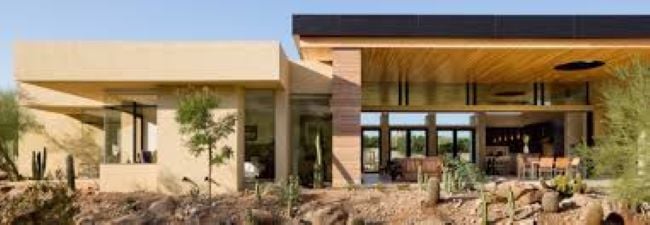
Many exceptional Arizona estates use relatively low horizontal forms.
Long rooflines.
Wide overhangs.
Courtyards.
Stone walls.
Natural landscaping.
The result is a home that feels connected to the land rather than simply placed on top of it.
This approach works particularly well around Camelback Mountain because the architecture can complement the dramatic vertical presence of the mountain.
Instead of competing with it, the home becomes part of the scene.
That balance is one of the things that separates thoughtful desert architecture from simply putting a large modern house on a desert lot.
Natural Materials Give Camelback Estates Their Sense of Permanence
Materials matter.
A lot.
Today's luxury buyers are increasingly drawn to materials that feel authentic rather than overly polished or trend-driven.
That includes:
- Natural stone
- Limestone
- Rammed earth
- Travertine
- Wood
- Natural plaster
- Steel
- Glass
These materials work particularly well in the Sonoran Desert because their colors and textures naturally complement the surrounding environment.
I've written about this shift in How Rammed Earth and Limestone Are Defining Desert Luxury.
Rammed earth can create thick, textured walls with natural variation.
Limestone can add warmth and refinement.
Natural stone can connect interior and exterior spaces.
Wood can soften modern architecture.
Together, these materials can create something that feels luxurious without being flashy.
And that distinction is becoming increasingly important.
Luxury is moving toward authenticity.
Deep Overhangs Are Beautiful — and Functional
Desert architecture has to deal with one very obvious challenge:
The Arizona sun.
That makes shade one of the most important architectural tools.
Deep roof overhangs can help protect windows and exterior walls from direct sunlight while creating shaded outdoor areas.
They also contribute to the visual character of the home.
A large overhang can create a dramatic horizontal line across a modern estate.
It can frame an outdoor room.
It can make a patio feel more intimate.
And it can help connect the architecture with the landscape.
In Deep Overhangs and Thermal Mass: The Engineering Behind Cool Desert Mansions, I explore how these traditional desert-design principles continue to influence today's luxury homes.
The best architecture isn't just beautiful.
It solves problems.
Indoor-Outdoor Living Is Essential
If you've spent time around Arizona luxury homes, you've probably noticed something:
The backyard isn't really a backyard anymore.
It's another living area.
Today's high-end estates can include:
- Covered outdoor living rooms
- Outdoor kitchens
- Dining areas
- Fireplaces
- Pools and spas
- Lounge areas
- Mountain-view terraces
- Retractable glass walls
- Courtyards
- Shade structures
The goal is to make the transition between inside and outside feel almost effortless.
This is especially important around Camelback Mountain.
Imagine sitting in a comfortable living room with the glass walls open, the mountain directly ahead, and the outdoor space functioning as an extension of the home.
That's the Arizona lifestyle at its best.
My article The Magic of Pocket Doors: Seamless Indoor-Outdoor Arizona Layouts explores how disappearing door systems help create this effect.
Glass Can Be Dramatic — But It Needs to Be Thoughtful
Large glass walls are one of the defining features of contemporary desert architecture.
And understandably so.
They bring in natural light.
They showcase mountain views.
They make rooms feel larger.
They connect the interior with the landscape.
But in Arizona, glass has to be used thoughtfully.
Orientation matters.
Shading matters.
Window performance matters.
And privacy matters.
A wall of glass facing a spectacular mountain view can be incredible.
A wall of glass facing intense afternoon sun without adequate shading can create a very different experience.
This is where architecture, engineering, and lifestyle have to work together.
A beautiful home should also be comfortable.
Courtyards Create Privacy and Protection
Privacy is one of the major attractions of Paradise Valley estate living.
Courtyards can help architects create that privacy while still bringing natural light and outdoor space into the home.
Instead of opening every room directly toward the street or neighboring properties, a home can turn inward toward a private outdoor space.
That courtyard might include:
- Mature desert landscaping
- Water features
- Fire elements
- Trees
- Seating
- Sculptural elements
- Covered walkways
The result can feel almost like a private resort.
This is particularly appealing for luxury buyers who want outdoor living without sacrificing seclusion.
Landscaping Is Part of the Architecture
A common mistake is to think of landscaping as something added after the house is finished.
At the luxury level, the best projects treat the landscape as part of the architecture.
The architect, landscape designer, and builder may work together to determine:
- Where trees should be planted
- Which views should remain open
- Where privacy is needed
- How pathways connect spaces
- Where shade should be created
- How outdoor rooms should function
- How native plants interact with the structure
This can dramatically change how a property feels.
A house surrounded by carefully designed desert landscaping can appear grounded and established.
The same house without thoughtful landscaping can feel exposed.
Modern Desert Architecture Doesn't Have to Feel Cold
For years, contemporary architecture was often associated with stark white walls, sharp angles, and minimal decoration.
That look still has its fans.
But Arizona's luxury design scene is increasingly embracing something warmer.
Think:
- Earth tones
- Natural stone
- Wood
- Textured walls
- Soft lighting
- Organic shapes
- Layered materials
- Indoor plants
- Comfortable furnishings
I've covered this trend in Why the "White Box" Mansion Is Out in Scottsdale.
The change isn't really about abandoning modern architecture.
It's about making modern homes feel more comfortable and connected to their surroundings.
That matters in a place like Paradise Valley.
The Best Estate Architecture Makes the Mountain Feel Closer
Here's what I think separates an ordinary luxury home from an exceptional one.
The exceptional home makes you feel something.
You walk through the front door and immediately understand why the house exists on that particular piece of land.
The mountain isn't just visible.
It's part of the experience.
The desert isn't just outside.
It's incorporated into the design.
The patio isn't just a patio.
It's another room.
The windows aren't just windows.
They're frames for the landscape.
That's when architecture becomes more than construction.
It becomes lifestyle.
What Luxury Buyers Should Look for in a Camelback Estate
If you're considering purchasing a luxury home near Camelback Mountain, I recommend looking beyond finishes and asking deeper questions.
How does the home use the view?
Are the best rooms positioned toward it?
How does the home handle the sun?
Are there meaningful shade strategies?
How private is the property?
Look beyond the walls and consider neighboring properties, landscaping, lot orientation, and outdoor spaces.
How does the outdoor space function?
Is it genuinely usable or simply impressive in photographs?
Are the materials timeless?
High-quality natural materials can age very differently from highly trend-driven finishes.
Does the architecture fit the location?
A home should feel appropriate for its environment.
How will the property live five or ten years from now?
A beautiful home isn't necessarily a good fit if its design doesn't match your lifestyle.
This is something I discuss in Why Buyers Sometimes Regret Buying Their "Dream Home" in Arizona.
Sometimes the house is beautiful.
The problem is that the lifestyle isn't.
Why Architecture Can Matter to Long-Term Luxury Value
Architecture doesn't guarantee future value.
But distinctive properties can have an advantage when they offer something difficult to replicate.
A spectacular mountain view can't simply be added later.
Neither can a particular lot.
Neither can an irreplaceable architectural setting.
That creates scarcity.
Luxury buyers often understand this intuitively.
They aren't necessarily looking for the biggest home.
They're looking for something they can't easily replace.
That might be a private estate with an extraordinary view.
A historic property.
A custom architectural masterpiece.
Or simply a home that feels perfectly connected to the desert.
In luxury real estate, scarcity can be powerful.
Real-Life Insight From Denise's 30+ Years in Arizona Real Estate
After 30+ years in Arizona real estate, I've toured an incredible variety of homes.
I've seen properties where the architecture immediately makes sense.
And I've seen very expensive homes where something feels slightly off.
Usually, the difference isn't the price tag.
It's the relationship between the home and the setting.
The properties that stay with me are the ones where everything feels intentional.
The orientation.
The materials.
The light.
The landscaping.
The outdoor spaces.
The views.
Nothing feels accidental.
That's what I look for when helping luxury buyers evaluate a property.
Because you're not simply buying the architecture.
You're buying the way that architecture makes you experience the land.
Why Working With an Experienced Agent Matters
Luxury architecture can be beautiful enough to distract you from asking practical questions.
That's why an experienced real estate advisor can be valuable.
As an AI Certified Agent with 30+ years of experience in Arizona real estate, I help buyers look at both sides of a luxury property.
Yes, we can appreciate the mountain views and beautiful finishes.
But we also need to understand the location, lot, layout, condition, privacy, future surroundings, and long-term fit.
My role isn't to tell you which house is the prettiest.
It's to help you determine which property makes the most sense for your life and your goals.
For buyers exploring luxury communities throughout Arizona, my Best Neighborhoods for Luxury Home Buyers in Arizona guide is another useful starting point.
Ready to Make Your Next Move With Confidence?
Buying a luxury home is more than buying square footage.
It's choosing a setting.
It's choosing a lifestyle.
And in Paradise Valley, it's often choosing a relationship with one of Arizona's most recognizable natural landmarks.
Camelback Mountain can become more than a view from the window.
With the right architecture, it can become part of how you experience your home every single day.
If you're considering an estate in Paradise Valley, Scottsdale, or another Metro Phoenix luxury community, I'd be happy to help you look beyond the finishes and understand what makes a property truly special.
I'm Denise Hurd, an AI Certified Agent with RE/MAX Premier and 30+ years of Arizona real estate experience.
Ready to make your next move with confidence?
Check the comment section for the link to my site and let's start the conversation.
Frequently Asked Questions
What architectural styles are common around Camelback Mountain?
You'll find a wide range, including contemporary, modern desert, Mediterranean-inspired, ranch, and highly customized estate architecture. The strongest examples often share an emphasis on views, privacy, natural materials, and indoor-outdoor living.
Why is architecture so important in Paradise Valley luxury homes?
Because the architecture can determine how effectively a property uses its views, lot, privacy, natural light, outdoor spaces, and desert surroundings.
What materials work best in desert luxury architecture?
Natural stone, limestone, rammed earth, wood, plaster, and other materials with natural textures are popular because they complement the Sonoran Desert and can create a warm, timeless appearance.
Are large windows a good feature in Arizona homes?
They can be, particularly when they capture exceptional views. But orientation, shading, glass performance, and climate control are important considerations in Arizona.
Why is indoor-outdoor living so important in Camelback Mountain estates?
Arizona's climate and landscape make outdoor living a major part of the luxury lifestyle. Well-designed homes use covered patios, disappearing doors, outdoor kitchens, pools, courtyards, and other features to extend the living space outside.
Does architecture affect a luxury home's value?
Architecture alone doesn't determine value, but distinctive design combined with an exceptional location, views, privacy, quality, and functionality can contribute significantly to a property's desirability.
What should buyers look for when touring a Camelback Mountain estate?
Look at the property's orientation, views, privacy, materials, outdoor spaces, shade, landscaping, floor plan, condition, and how naturally the architecture fits the land.
Sources
Town of Paradise Valley planning and design documentation regarding desert architecture, indoor-outdoor living, natural materials, shading, and Camelback Mountain views.
Denise Hurd — How Rammed Earth and Limestone Are Defining Desert Luxury.
Denise Hurd — Deep Overhangs and Thermal Mass: The Engineering Behind Cool Desert Mansions.
Denise Hurd — How Arizona Estates Build the Perfect Four-Season Living Room.
Denise Hurd — Why Biophilic Design Dominates New Scottsdale Builds.
Denise Hurd — What Truly Defines a Luxury Home in Arizona Today.