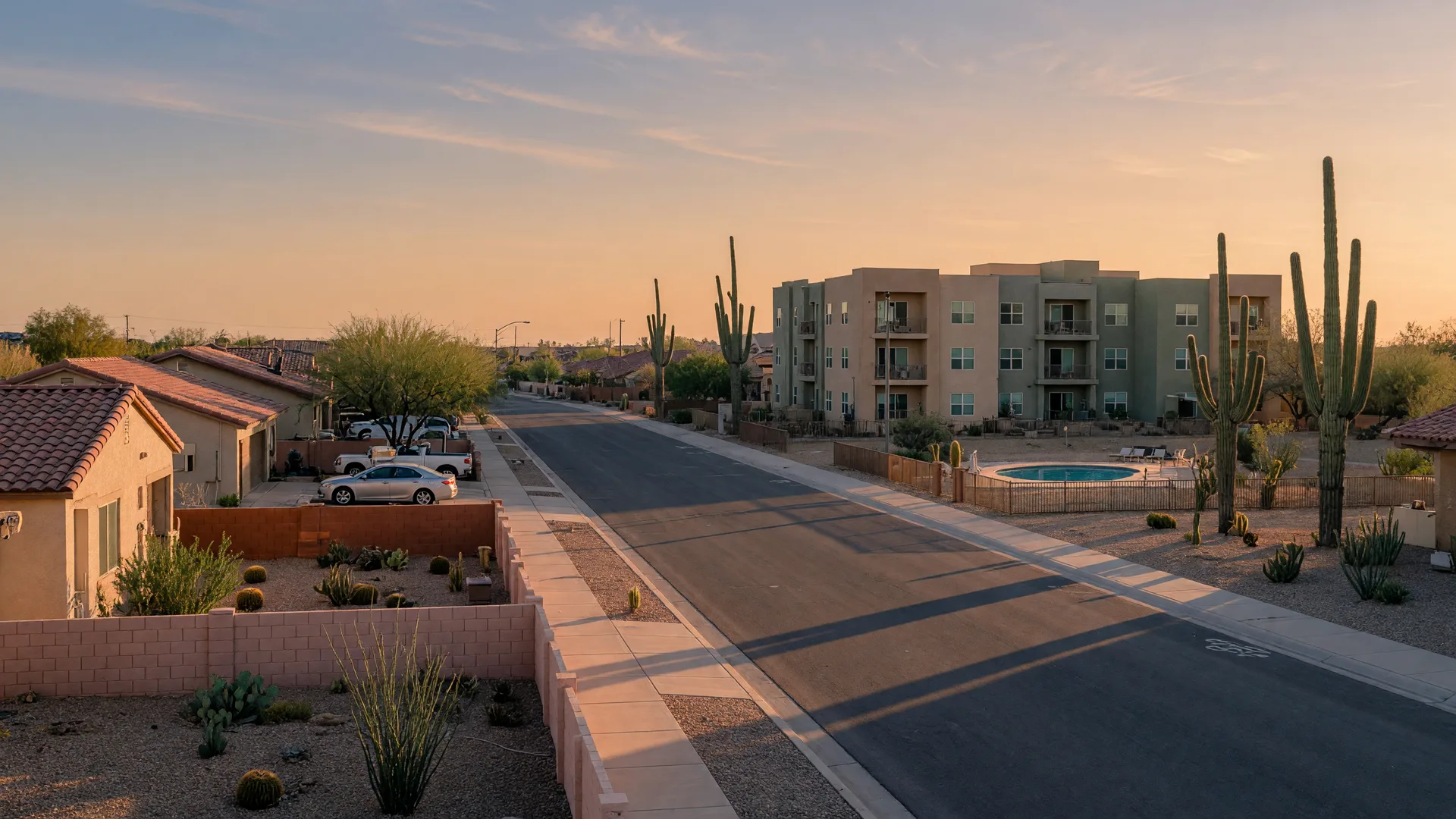
Should you continue renting in Phoenix, or is 2027 the year to consider buying a home? It's a question many Arizona residents and people planning a move to the Valley are asking as housing costs, mortgage rates, and rental prices continue to influence their decisions.
The answer isn't as simple as comparing monthly rent with a mortgage payment. Buying a home comes with additional expenses, including property taxes, homeowners insurance, maintenance, and potentially homeowners association (HOA) fees. Renting, on the other hand, offers flexibility and generally leaves major property repairs to the landlord, but it doesn't build ownership equity.
Phoenix's housing market also gives buyers and renters different factors to consider. Recent data shows that asking prices have softened, while rental trends vary depending on the type of property and the data source.
Hi, I'm Denise Hurd with RE/MAX Premier.
With more than 30 years of real estate experience, I believe the best housing decision starts with understanding your finances, lifestyle, and plans for the future, not simply trying to predict the market.
If you're deciding whether to rent or buy in Phoenix in 2027, here's how to evaluate your options.
What Does the Phoenix Housing Market Look Like Heading Into 2027?
Before comparing renting and buying, it's helpful to understand where the local market stands.
According to Realtor.com's Phoenix housing market report, September 2026 data showed:
- A median home listing price of approximately $449,900, down 5.28% year over year.
- A median sold price of approximately $449,992, essentially unchanged year over year.
- A median advertised rent of approximately $1,619 per month, up slightly from the previous year.
- A median of 66 days on the market for homes for sale.
These figures suggest that asking prices have adjusted, but completed sale prices have remained relatively stable. They also show why it's important to distinguish between what sellers are asking and what buyers are actually paying.
Rental figures require similar care. For example, Apartment List's October 2026 Phoenix rent report placed the city's median rent at $1,255, down 2.9% year over year. Its methodology and property coverage differ from Realtor.com's, so these figures shouldn't be treated as interchangeable.
The takeaway is that Phoenix housing costs vary by property type, location, and data source. Neither a citywide median rent nor a median home price tells you exactly what a comparable home would cost to rent or buy.
For a broader look at local conditions, read my Phoenix housing price update.

Renting vs. Buying: What Are the Real Costs?
One of the most common mistakes people make is comparing monthly rent directly with a mortgage payment.
Suppose you find a rental home for $1,800 per month and a home for sale with an estimated mortgage payment of $2,200 per month. At first glance, renting appears to save $400 each month.
But that comparison is incomplete unless you understand what the mortgage estimate includes and which additional ownership costs apply.
The cost of renting
Renters generally need to budget for:
- Monthly rent.
- Renters insurance.
- Utilities and other services not included in the lease.
- Security deposits and possible moving expenses.
- Rent increases when renewing a lease.
- Pet fees, parking fees, or other applicable charges.
The biggest financial advantage is predictability over the lease term. Renters also generally aren't responsible for major structural repairs or replacing the home's air conditioning system, although lease terms and local laws determine each party's responsibilities.
The cost of buying
Homeowners need to account for more than principal and interest.
Typical ownership expenses include:
- Mortgage principal and interest.
- Property taxes.
- Homeowners insurance.
- Routine maintenance and unexpected repairs.
- HOA fees, if applicable.
- Utilities and landscaping.
- Closing costs and other upfront expenses.
Depending on the mortgage and down payment, private mortgage insurance may also apply.
Buying can build equity over time as you repay the loan principal, but that equity isn't guaranteed to grow. Property values can rise or fall, and selling a home involves additional transaction expenses.
How Mortgage Rates Affect the Decision
Mortgage rates are one of the biggest variables when comparing renting and buying.
Freddie Mac reported that the average 30-year fixed mortgage rate was 7.32% for the week ending October 22, 2026, down from 7.40% the previous week. These are national averages, not guaranteed rates for individual borrowers. Your actual rate will depend on factors such as credit, loan type, down payment, and lender terms. See Freddie Mac's latest mortgage rate report.
To illustrate how borrowing costs affect a purchase, consider a hypothetical $450,000 home with a 20% down payment.
| Example | Amount |
|---|---|
| Purchase price | $450,000 |
| Down payment (20%) | $90,000 |
| Mortgage amount | $360,000 |
| Illustrative interest rate | 7.32% |
| Loan term | 30 years |
| Estimated monthly principal and interest | About $2,470 |
This is an illustration, not a quote or a forecast of 2027 mortgage rates. The monthly payment excludes property taxes, homeowners insurance, HOA fees, maintenance, and closing costs.
It also doesn't account for the opportunity cost of putting $90,000 into a home instead of keeping that money available for savings or other priorities.
The example shows why a home that appears affordable based on its purchase price may still produce a substantially higher monthly expense than renting.
When Renting May Make More Financial Sense
Renting can be a sensible decision when it supports your financial priorities or gives you flexibility you currently need.
You're planning to move within a few years
If you expect to relocate for work, move closer to family, or change cities within a short period, renting may be more practical.
Buying involves upfront closing costs and future selling expenses. A short ownership period may not provide enough time for equity growth to offset those costs, especially if property values remain flat or decline.
You want to strengthen your finances
Renting may give you time to build savings, pay down debt, improve your credit profile, or establish a more reliable income history before applying for a mortgage.
A down payment is only part of the preparation. You should also have funds available for closing costs, emergencies, and future maintenance.
You prefer fewer maintenance responsibilities
Homeowners are responsible for managing repairs and replacing equipment when necessary. In Phoenix, air conditioning performance is particularly important during the summer months.
Renters generally have fewer direct responsibilities for major repairs, subject to their lease and applicable law. That can make renting attractive if you prefer predictable obligations or don't want to manage property maintenance.
You haven't settled on a neighborhood
If you're new to Phoenix, renting can give you time to learn how different parts of the Valley fit your lifestyle.
You might discover that your preferred commute, access to outdoor recreation, or everyday errands lead you toward a different neighborhood than you initially expected.
My Arizona relocation guide can help you consider the factors involved in choosing where to live.
When Buying May Make More Sense
Buying deserves serious consideration when your finances and longer-term plans support homeownership.
You expect to stay for several years
A longer ownership period gives you more time to repay mortgage principal and potentially benefit from property appreciation. It also spreads the impact of upfront transaction costs over a longer period.
There is no universal number of years that guarantees buying will be financially better than renting. The answer depends on the purchase price, mortgage rate, future rent changes, ownership expenses, and what happens to property values.
You have enough savings beyond the down payment
A financially comfortable purchase should leave you with reserves for emergencies and ordinary life expenses.
Using nearly all your savings to buy a home can leave you vulnerable if the air conditioner fails, your income changes, or an unexpected expense appears.
You want greater control over your home
Homeownership can provide more freedom to personalize a property, renovate, landscape, or create an outdoor living space, subject to applicable restrictions and permits.
For buyers who want a pool, a particular floor plan, or a long-term place to settle, ownership may align better with their goals than renting.
You want to build equity
Part of each principal-and-interest mortgage payment reduces the outstanding loan balance. Over time, this can increase your ownership stake in the property.
However, equity is not the same as cash in the bank. Accessing it may require selling the home or borrowing against it, and its value depends partly on the property's market price.
Don't Forget Phoenix-Specific Ownership Costs
Phoenix homes can come with expenses that deserve particular attention before buying.
- Air conditioning and energy use: Ask about the cooling system's age, maintenance history, and performance. Summer electricity expenses can vary considerably depending on the home's size, insulation, equipment, and usage.
- Pools and landscaping: A swimming pool can be appealing, but maintenance, equipment repairs, water use, and safety measures add to ownership responsibilities.
- HOA fees: Some communities charge monthly or annual fees for shared amenities, landscaping, or neighborhood maintenance. Review the association's rules, budget, and any applicable assessments before committing.
- Property taxes and insurance: Include these costs in your monthly budget rather than evaluating a home using principal and interest alone.
- Maintenance reserves: Roofs, plumbing, appliances, and cooling equipment eventually need repairs or replacement. The timing and cost can vary substantially by property.
If you're comparing homes with different features, my guide to how Phoenix summers affect homeownership explains why cooling, shade, pools, and outdoor spaces deserve attention.

How to Make a Fair Rent-versus-Buy Comparison
Rather than deciding based on a general rule, compare a specific rental with a specific home you could realistically purchase.
Use the following checklist:
- Estimate the full monthly cost of buying. Include principal, interest, taxes, insurance, HOA fees, and a reasonable allowance for maintenance.
- Calculate upfront expenses. Account for the down payment, closing costs, moving costs, and the emergency savings you want to retain.
- Compare similar properties. A small apartment and a three-bedroom house don't provide the same space or lifestyle. Match the property type, size, and location as closely as possible.
- Consider your expected time in the home. A shorter stay can make transaction costs more significant.
- Test different scenarios. Look at how your decision changes if rent increases, mortgage rates change, maintenance costs are higher than expected, or home prices remain flat.
- Account for the money you don't spend upfront. If you rent, consider what you would do with the money otherwise used for a down payment and closing costs.
For a more complete assessment, a rent-versus-buy calculator can help model different holding periods, appreciation assumptions, mortgage rates, and investment returns. Use realistic assumptions rather than relying on an optimistic forecast.
If buying remains a possibility, my step-by-step guide to buying a house in Arizona explains the process and preparation involved.
Should You Wait Until 2027 to Buy in Phoenix?
Waiting may be reasonable if you need more time to save, improve your credit, or clarify where you want to live. It may also give you time to compare additional properties and understand local pricing.
However, there is no reliable way to know exactly where Phoenix home prices or mortgage rates will be throughout 2027. Lower prices in the future are not guaranteed, and neither are lower borrowing costs.
The more useful question is whether buying a home that fits your budget makes sense under today's conditions and a range of plausible future scenarios.
If purchasing would leave you financially stretched, waiting may be the more comfortable choice. If you have stable finances, adequate reserves, and a home that fits your longer-term needs, buying could still be worth exploring.
The decision should be based on your financial position and personal plans, not pressure to time the market perfectly.
Why Working With an Experienced Real Estate Agent Matters
Renting and buying each have advantages, and the right choice depends on more than a headline about home prices or mortgage rates.
With more than 30 years of real estate experience, I help buyers understand local property options, compare neighborhoods, and evaluate how a potential purchase fits their goals.
As a Realtor with RE/MAX Premier, I believe clear information and honest conversations are essential. Sometimes buying is the right next step. Sometimes continuing to rent gives someone the flexibility or financial breathing room they need.
My goal is to help you understand your options so you can make a decision that feels right for your circumstances.
Ready to Make Your Next Move With Confidence?
Renting can offer flexibility, while buying can provide greater control and an opportunity to build equity over time. Neither option is automatically better for everyone. If you're considering a move in Phoenix, Gilbert, Mesa, Scottsdale, or a nearby community, I can help you explore the local market and understand the housing options that may fit your budget and lifestyle.
Visit Denise Hurd's website to learn more about Arizona real estate and plan your next move.
Frequently Asked Questions
Is it cheaper to rent or buy in Phoenix in 2027?
The answer depends on the property, down payment, mortgage rate, taxes, insurance, maintenance, and how long you plan to stay. Renting can have a lower monthly cost, while buying may build equity over time. Compare similar properties using the full cost of ownership.
Are Phoenix home prices expected to drop in 2027?
Future prices are uncertain. Recent data showed lower asking prices than a year earlier, while median sold prices were relatively stable. Those trends don't guarantee further declines in 2027.
How long should I plan to stay in a home before buying makes sense?
There is no universal break-even period. A longer stay generally gives you more time to spread transaction costs and repay principal, but the outcome depends on appreciation, mortgage costs, maintenance, and other assumptions.
What expenses do first-time homebuyers often overlook?
Commonly overlooked expenses include closing costs, property taxes, homeowners insurance, HOA fees, repairs, maintenance, and the opportunity cost of using savings for a down payment.
Should I buy a home before mortgage rates fall?
Not necessarily. Future rates are uncertain, and waiting may or may not improve your overall financial position. Evaluate the home's affordability at the rate available to you now, and avoid relying on refinancing as a guaranteed future solution.
Sources
- Realtor.com. Phoenix Housing Market Overview.
- Apartment List. Phoenix Rent Report, October 2026.
- Freddie Mac. Mortgage Rates, October 22, 2026.
- Arizona Department of Revenue. Property Tax Information.
- Consumer Financial Protection Bureau. Owning a Home.

Denise Hurd
Luxury Real Estate Specialist · RE/MAX Premier · Realtor · SA044656000
With over 30 years in Metro Phoenix real estate, I help buyers and sellers make confident, well-informed decisions across Phoenix, Gilbert, Mesa, Scottsdale, Chandler, Tempe, and Queen Creek. Call me at 480-980-4400 or book a free consultation, and let's figure out the right move for you. For quick answers to more questions like these, the top questions I hear from Valley buyers and sellers are answered on my FAQ page.